

The truth about blind tasting. Is it really just a party trick?
Do sommeliers really need to blind taste to do their jobs? Here’s the inside scoop.

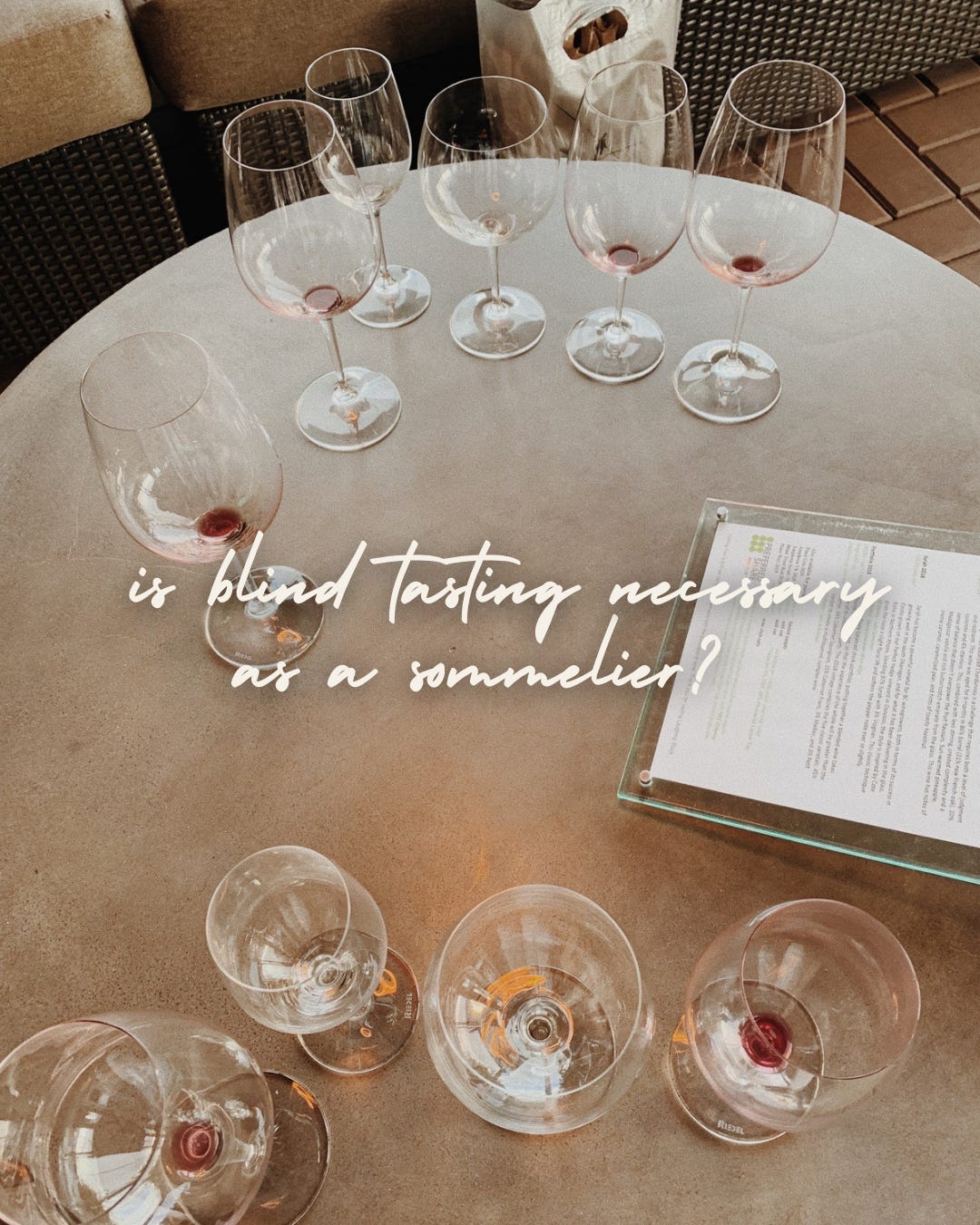
If you’re a wine person or generally interact with wine content online, you’ve probably seen sommeliers blind taste wine on camera. There is something fun about it; Will they get it right? Are they as smart as they say they are? Or, worse, when you get to my level, you listen to their tasting notes and try to deduce what the wine is, then feel a selfish sense of pride when you guess right and they don’t. I’m cruel, I know.
But what is the point?
Blind tasting isn’t something you have to do to actually do the job as a sommelier. It’s kind of like telling someone they need to be a master at calculus when their job is accounting.
While blinding is not something we specifically do to succeed as somms, it does train a mustache that is rather necessary for the job: honing in on your palate.
In general, the point of blind tasting is to strip away stereotypes and preconceived notions about a wine/producer and to taste the wine for what it is. While sommeliers can generally taste the difference between a cheaply made wine versus a higher quality one, every now and then you can be surprised. It’s fun to discover a wine that delights for under $15, or to even discover that a wine that retails for $100 actually doesn’t stand up to that kind of value. It’s part of what makes wine so interesting.
Yes, it’s fun to watch a sommelier get the blind tasting right on screen. But it’s also equally satisfying to watch a somm incorrectly guess a higher end wine, be surprised by the actual bottle, and claim that the wine is, in fact, very good.
Blind tasting is also a means of studying and categorizing taste. Yes, every wine and region is distinct and unique. However, blind tasting helps a sommelier to categorize wine based on acidity, body, tannins, alcohol, and general flavor and tasting notes. This practice comes in handy when a guest says they like a type of wine (“I drink a lot of Sancerre!”) and you can go through your mental rolodex and recommend something similar.
I enjoy blind tasting for the sake of practice and exercising that muscle, but honestly, I have no desire to enter competitions anytime soon. I’d rather keep my boots on the ground and let a wine surprise me when I get it wrong.
You may also like…



Wine of the week
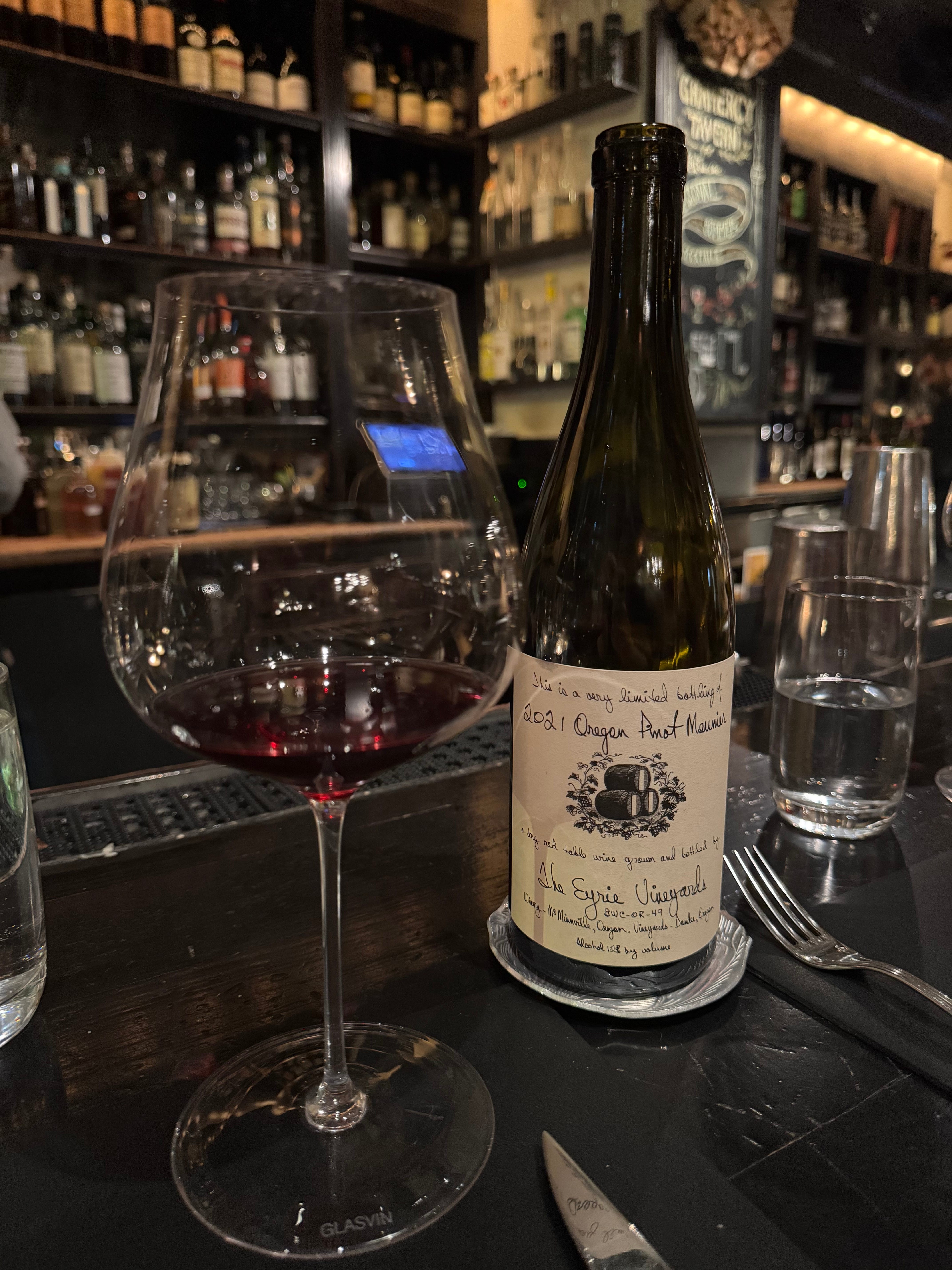
I was in the mood for an Oregon Pinot Noir this week, but the sommelier over at Gramercy Tavern convinced me of The Eyrie Vineyard’s 2021 Oregon Pinot Meunier, and I am not mad about it. It’s rare to find this grape as a red wine, and Eyrie perfected it with such beauty. Pair with the Tavern Burger. An ✨experience✨ to say the least.
Tasting notes
Appearance: Clear, moderate intensity, ruby color, developing
Nose: Peanuts, wild strawberries, white pepper, violets, no evidence of oak, developing
Palate: Dry, medium-plus acidity, silky tannins, light alcohol, light body, lots of crunchy red fruits on the palate, long finish
Final conclusion
Nutty at the start, but as she opens, she’s juicy, crunchy red fruit and velvety tannins on the finish. The kind of red wine you want to luxuriate over.
Join the Cellar Club!
I paid thousands for a wine education, but you’re getting it for $8/month. While I loved my time at sommelier school, there’s no need to pay for it if you’re simply looking to level up your wine confidence.
Here’s what a PAID SUBSCRIPTION will get you:
Cellar Club Exclusive Content: Dive even deeper with your wine knowledge so you can order and buy with confidence. Bottle recommendations, types of wine to try, wine basics so you understand all of the terms…the list goes on and on, people.
Food & Wine Pairing Guides: Learn how to pair the wine you’re drinking with some of your favorite meals you love to cook, or even takeout. Pasta, burgers, sushi…we’re going to cover it all.
Seasonal Supper Club: Invite your friends over for a seasonal dinner party! Use this menu and wine pairing guide to throw the sophisticated dinner parties of your dreams.
Wine Travel Itineraries: Skip the random Instagram and ChatGPT guides on your next trip. These exclusive guides are from real experiences and guidance from yours truly.
Sommelier Inside Scoop: Join me at industry tastings, read the behind-the-scenes stories, sip on what I’m also drinking, and get the inside scoop as I continue in this new sommelier career.
Live Tastings & Classes: Learn how to properly taste wine and ask all of your burning questions with a real sommelier live, right here on Substack! There may even be opportunities to chat with winemakers and other cool industry folk in the future.
Here’s what FREE + PAID SUBSCRIBERS will get:
Weekly essays: Get a taste of some practical education, recommendations, sommelier hot takes, easy quick pairings, “Wine of the Week” features, and other fun content from yours truly. Expect this in your inbox on Saturday mornings.
Wine Challenge Monthly Explainers: If you are following along with the 2026 Wine Challenge, your monthly explainers will remain in the free subscription tier for the rest of the year.
If this sounds like something you’re looking for, then welcome! I’m so glad you’re here. Let’s get you on that list. 👇🏼
For me, the greatest benefit of blind tasting is creating my own internal filing system of sensory impressions. For example, even though I can memorize the classic markers for Albariño, I know through blind tasting that it hits me like lemon zest, salty sea spray and peach rings (like the candy!). To me, this is the most fun and also most useful part. Great article, Kiersten!