


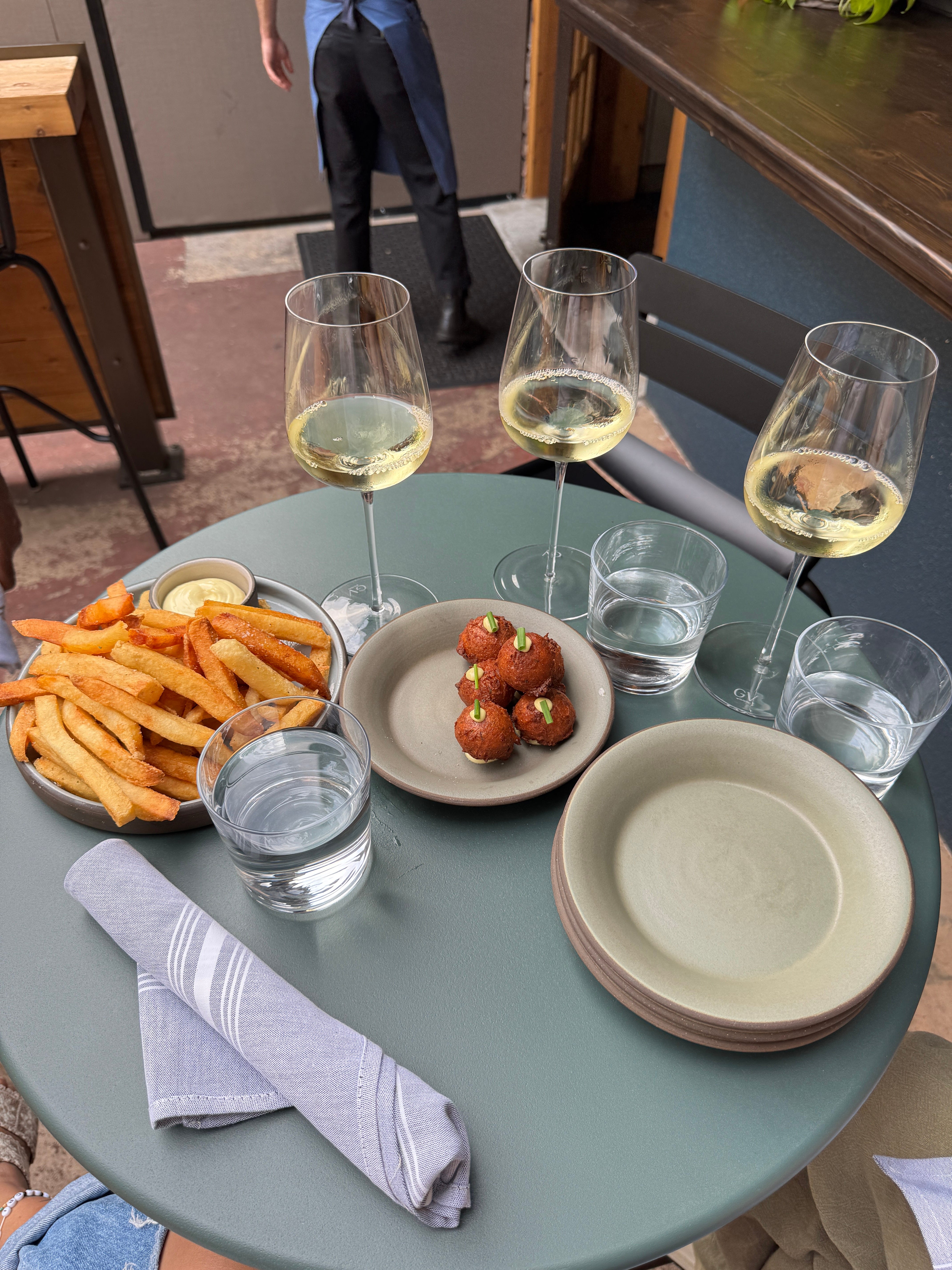
Some would say that the wine you choose is just as important as the food on your plate. (Me included.) But I think it’s safe to say that for most people opening a bottle of wine for a meal, the wine is simply an accessory. A little added bonus. A little something, something to add to the main event—your dinner. A garnish, perhaps.
So…if we’re going to think of the wine as the garnish, as the little oomph to give your meal that much more edge, then let’s treat it as such. Let’s choose a wine based on the garnish that you would top with your dish.
Let me explain.
In almost every circumstance, if you think of the kind of garnish that you would top with your dish—from your appetizer to your dessert—a wine with a similar tasting profile will also work well.
It’s a theory that I sort of thought up on my own (I guess I’m a sommelier now, so call me a professional), and when I put the theory to test, it worked for every dish I could come up with.
So let’s look at some dishes.
Cheese and charcuterie
When you put together a charcuterie board, what kinds of elements do you add? Is it just meat, cheese, and bread, or are you adding other accouterments? For me, I love to add some nuts, some fruit, and spreads—like a fig jam or honey. Anyone who’s had a cheese on a cracker with a drizzle of honey knows that it is the ultimate sweet, salty, creamy combo. So why would the same not work when picking up your wine?
It may sounds strange, but the best wine to go with your cheese and charcuterie is a sweet wine. Something that has that similar honey or sweet jam character that will add that sweetness to your collection of cheese. The sweetness will mellow out with the savory foods, and vice versa with the salt in your meats and cheese.
Sweet wine examples
Jurançon (my favorite!), Vouvray, Sauternes, Quarts de Chaume, Cour-Cheverny (more fruity than honeyed), Alsace Gewurtztraminer
Fried food: Fish, fries, chicken…
When you get a plate of something fried, like fish and chips or a chicken sandwich, how often are your fried foods coming with a little wedge of lemon? That’s because a fried food does well with a hint of acid. The acidity balances out the heavy fattiness, mellowing it out. Plus, think about the kind of sauce you use for a fried food. Perhaps ketchup…but one of the best pairings is actually something creamy or mayonnaise based, like ranch or aioli.
This is why sparkling white wines do well here. Sparkling wines typically come from cooler climates, which means the wine is much higher in acidity. (Similar flavor profile to squeezing a slice of lemon!) They also add a creaminess thanks to the lees aging—get a wine made in the “traditional method”—and the bubbles are a nice texture bonus to go with the crispiness of your fried food.
Sparkling white wine examples
Champagne, Crémants, English Sparkling Wine, Cava, Méthode Cap Classique, Sekt, Franciacorta, Espumante
Creamy dishes: Pasta, risotto…
In a similar fashion, dishes that have lots of cream will have a loaded fattiness thanks to the butter, dairy, and oil. Think of Samin Nosrat’s four basic keys to good cooking: salt, fat, acid, and heat. Acidity is necessary to give that dish that delicious edge, which is why some are also served with a lemon wedge or have lemon flavoring, and why a high-acid white wine also works really well here. As a bonus, many creamy dishes are topped with some kind of herb, greenery, or a hint of pepper, which makes sense for a number of high-acid white wines that have a bit of a grassy, floral, or peppery finish.
High-acid white wine examples
Sauvignon Blanc (Sancerre, Menetou-Salon, Bordeaux Blanc Sec), Pinot Grigio/Pinot Gris, Chenin Blanc (Anjou Blanc, Saumur Blanc), Melon de Bourgogne (Muscadet), Vermentino/Vermentu, dry Riesling (look for “Trocken” on the label), Albariño (Vinho Verde, Rias Baixas)
Spicy food
Garnishes for a spicy food can vary, but a good number of dishes may be topped with something sweet, like fruit or a sweet pickled something. And of course it works! I mean, think about the delectable combo of hot honey. A little sweet, a little spice? It just works. This is why a semi-sweet wine works well for your spiciest fare, like Thai food, Indian food, or some Chinese dishes. Some of these dishes are even served with a lime wedge, adding acidity and a touch of sweetness. (I get a lot of candied lime character on the palate with semi-sweet wines.)
Semi-sweet wine examples
German Rieslings (Look for “Kabinett” on the label), Moscato d’Asti, Late Harvest wines, some Alsace wines
Casual fare: Cheeseburgers, hot dogs, pizza
What is the most popular garnish that goes on a cheeseburger or hot dog? Ketchup. The sweet, high-acid sauce creates the perfect balance with the salty and fatty food, and wine can pretty much be treated the same. And okay, not everyone might be putting ketchup on pizza, but I know a fair number of people (cough, my in-laws, cough) who love to enjoy their pizza with an extra bowl of marinara dipping sauce. More sweet, tomato goodness. This is why a high-acid red wine will work well with these foods.
High-acid red wine examples
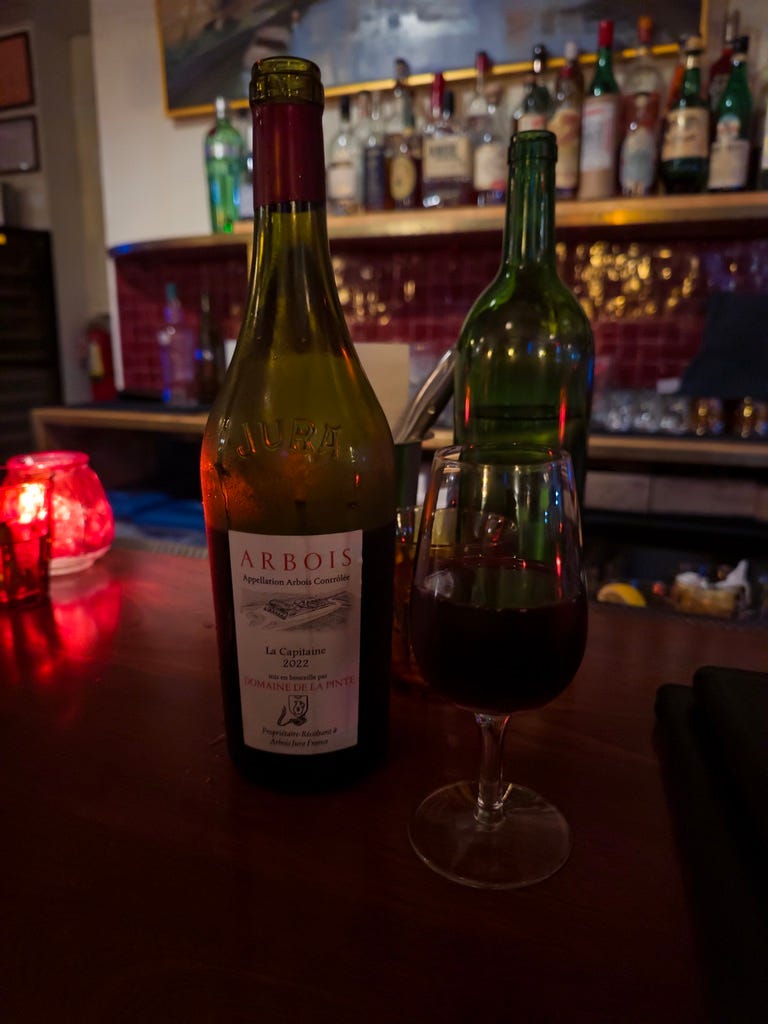
Pinot Noir (Bourgogne Rouge, Spätburgunder), Sangiovese (Chianti), Nebbiolo, Barbera, Cabernet Franc (Chinon), Arbois Rouge
Elevated fare: Steak, roast beef, duck, pork tenderloin
When it’s time for a nice sit-down dinner, I think of elegance. I think of topping my protein with herbed butter or thick reductions and plummy sauces. I think of big and bold, and what better pair than a glass of big, bold, red wine. These wines usually have darker fruit components, are fuller bodied (like a fuller sauce), have some buttery characteristics thanks to the oak, and some have a good tannin structure, which helps to break down the tough proteins in your meat. (Fun fact: this softens everything up in your mouth and creates that “melt in your mouth” feel.) So don’t bother with that big, bold red for your charcuterie board—save it for dinner.
Big, bold, red wine examples
Cabernet Sauvignon, Merlot (Bordeaux blends), Zinfandel (Primitivo), Malbec (Cot, Cahors), Grenache/Syrah blends (Côtes du Rhône, Châteauneuf-du-Pape), Tempranillo (Rioja, Ribero-del-Duero, Tinta Roriz), Nero d’Avola
Desserts
Would you really top your dessert with a savory red sauce full of bitterness? No? Then stop having dessert with red wine. 🙃 It only makes your dessert taste bitter and the flavors just clash. But I do think a drizzle of a caramel or chocolate sauce would do nicely, don’t you think? That’s why fortified wine works well here. These wines have that caramel and chocolate character, and still have some sweetness since they are essentially sweet wines with brandy added to them. They make for the perfect after dinner drink, and pair divinely with your dessert.
Fortified wine examples
Port, Madeira, Sherry (Oloroso, Pedro Ximenex), Rivesaltes Ambre, Moscatel de Setúbal
What do you think? Would you try these pairings? Tell me your thoughts!
Wine of the week
Couldn’t help but order a bottle of the Domaine de La Pinte Arbois ‘La Capitaine’ 2022 from Jura, France. It’s 60% Pinot Noir and 40% Poulsard. I 100% enjoyed this with a cheeseburger from Liar Liar in Brooklyn. High acid red and cheeseburger? Duh, delectable combo!
Tasting notes:
Appearance: Medium deep ruby color, with medium viscosity
Nose: No evidence of oak, oxidation, herbs, raspberry, pomegranate, cherry, dusty
Palate: Medium plus acidity, light body, medium alcohol, no evidence of new oak, very long length
My conclusion: Light, bright red fruit with herbs and dustiness. Great wine chilled. Darker color and intensity for the blend, but still drinks light.


This is great! Thank you for sharing your expertise on this! As someone who knows almost nothing about wine but regularly gifts it to other people, I needed this guide. 🥰